
Physical Conditioning and Wellness Strategies
A structured, neutral exploration of exercise methodologies, training frameworks, and the broader context of physical well-being — presented for general understanding.
A Framework for Understanding Physical Conditioning
Physical conditioning encompasses a broad and historically layered field of human knowledge. From ancient practices of structured movement to modern frameworks of periodisation and recovery, the subject spans cultures, eras, and interpretations.
Veridocu approaches this field as an editorial resource: presenting concepts, contextualising methodologies, and clarifying terminology — without advocating for specific routines or outcomes. Our aim is to make the landscape of physical conditioning accessible and legible to any reader, regardless of background.
The materials here are organisational in nature. They reflect a range of documented approaches and do not constitute a programme, a plan, or a directive of any kind.
View our editorial approachThree Foundational Dimensions of Physical Conditioning
Each dimension represents a distinct body of knowledge within the broader field — examined here in descriptive, neutral terms.

Endurance and Aerobic Foundations
An overview of how sustained physical effort is understood across various training traditions. Covers general principles of aerobic capacity, the concept of training zones, and the role of consistency in long-duration physical activity.
Learn more
Strength and Structural Load Concepts
Explores the conceptual landscape of resistance-based physical conditioning. Discusses principles such as progressive overload, mechanical tension, and the distinction between hypertrophy-focused and strength-focused frameworks as documented approaches.
Learn more
Mobility, Flexibility, and Movement Quality
A contextual examination of how movement range and joint mobility are discussed within physical conditioning literature. Covers the distinction between passive flexibility and active mobility, and how these concepts appear across different training traditions.
Learn moreFrequently Misunderstood Aspects of Physical Conditioning
Does more exercise always lead to better outcomes?
Volume alone is not a reliable indicator of conditioning quality. Many documented methodologies emphasise recovery, adaptation periods, and variability in load as equally significant factors within any sustained physical practice.
Is soreness an accurate measure of effort?
Delayed onset muscle soreness reflects a specific physiological response, but is not universally accepted as an indicator of productive physical stimulus. Its presence or absence carries limited informational weight across different movement contexts.
Are structured programmes universally applicable?
Documented fitness frameworks are designed around general populations or specific demographic groups. Their contextual origins, constraints, and assumptions are important considerations when reading or interpreting any described approach.
Is high intensity always the most effective approach?
The relationship between effort intensity and adaptation is non-linear and varies by context. Low and moderate intensity work forms the foundation of most historically documented long-term conditioning frameworks.

Key Terms in Physical Conditioning
- Periodisation
- A structural approach to organising physical activity over time, typically involving planned variation in volume, intensity, and focus to allow for adaptation and recovery within a defined cycle.
- Progressive Overload
- The principle of gradually increasing the demand placed on the body during physical activity, commonly discussed in resistance training literature as a mechanism for continued adaptation.
- Aerobic Threshold
- A reference point in exertion intensity below which the body primarily uses oxygen-based metabolic pathways, frequently cited in endurance training frameworks as a guide for effort calibration.
- Recovery Window
- The period following physical exertion during which physiological processes of adaptation and restoration are understood to occur. Duration and quality of this window are discussed variably across different conditioning methodologies.
- Functional Movement
- A broadly used term describing movement patterns that relate to common physical activities or occupational tasks. Definitions vary significantly between disciplines and training traditions.
- Training Volume
- A quantitative measure of total workload within a given period, often calculated through combinations of sets, repetitions, and load. Its interpretation differs across strength and endurance-focused frameworks.

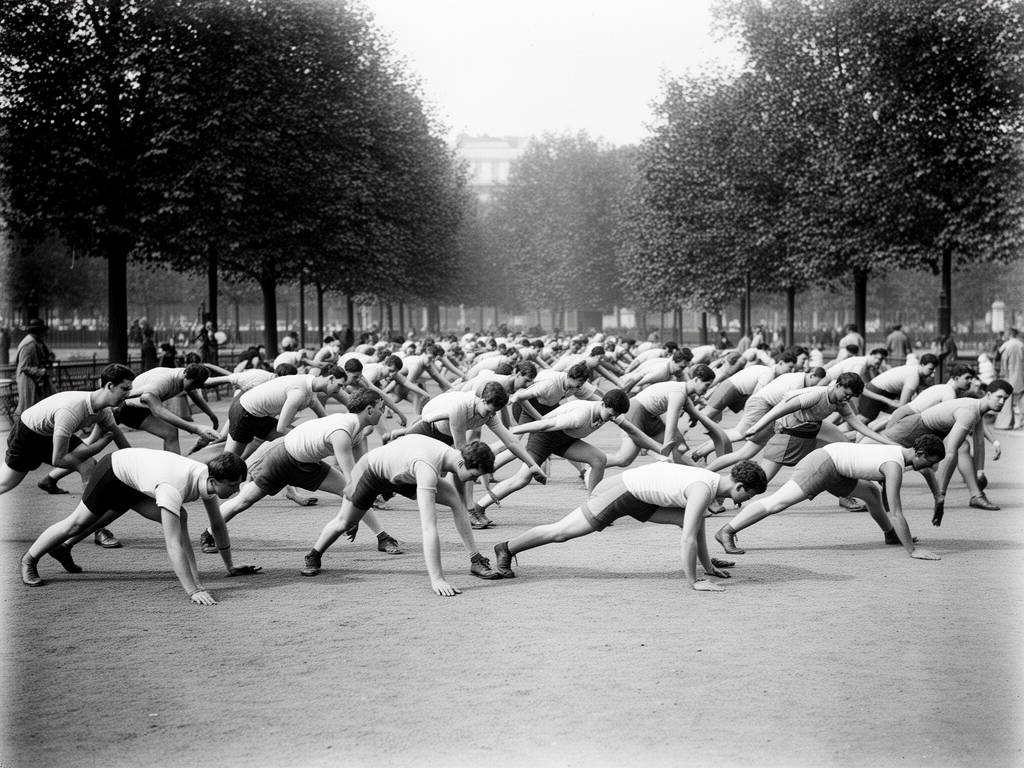
The Evolution of Physical Conditioning Approaches
Organised physical training has been documented across many cultures and historical periods. From the structured gymnastic systems of nineteenth-century Europe to the laboratory-informed periodisation models of the latter twentieth century, the field has undergone substantial conceptual transformation.
Each era brought its own assumptions, priorities, and frameworks. Some emphasised collective discipline and military utility; others focused on individual physiological measurement or competitive performance. Contemporary frameworks draw on all these lineages in varying proportions.
Questions About Physical Conditioning Frameworks
What does "structured conditioning" mean in an educational context?
In an informational context, "structured conditioning" refers to approaches that organise physical activity according to defined principles — such as varying intensity over time, alternating between different types of effort, or following documented patterns developed within sport science literature. The term describes a category of approaches rather than a specific programme.
How do different training traditions define "fitness"?
Definitions of fitness vary considerably across traditions. Military frameworks often emphasise functional capacity and endurance. Competitive sport frameworks focus on specific performance metrics. Wellness-oriented frameworks may centre on consistency, energy, and subjective quality of physical experience. Veridocu presents these as distinct perspectives without ranking or prioritising any single definition.
What is the purpose of rest periods in conditioning literature?
Rest intervals are discussed across nearly all documented conditioning frameworks. Their role is described variably — as time for physiological adaptation, as a means of managing cumulative fatigue, or as a structural tool for training quality management. Different traditions assign different lengths and types of rest, reflecting their underlying theoretical assumptions.
Is there a universally accepted model for physical wellness?
No single universally accepted model exists. Wellness frameworks differ between public health institutions, sport science traditions, and cultural or philosophical approaches to physical activity. Veridocu presents the range of these frameworks as a descriptive landscape, noting where significant divergences or overlaps occur.
Questions About Our Materials
If you have general questions about the content or structure of materials on Veridocu, our contact page provides the relevant information for reaching us.

Structured Knowledge for a Complex Field
Veridocu exists to make the landscape of physical conditioning legible — from foundational terminology to historical context and the nuances between competing methodologies.
Explore the topic